What is a hydrocolloid dressing?
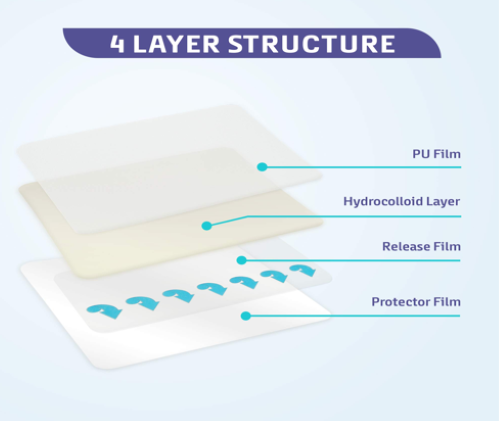
l Hydrocolloid dressings usually contain a gel-forming agent, such as sodium carboxymethyl cellulose, on a semi-permeable film.
l Hydrocolloidal dressings form hydrophilic gels when they come into contact with wound fluid or exudate. The main function of the gel is to hydrate the wound and speed up the healing process. It can absorb exudate and promote wound autolysis debridement.
l As the gel process occurs, the permeability of the dressing increases. Therefore, moisture can increase the ability of the dressing to absorb exudate by evaporation of the dressing.
When can use water gel dressing?
Hydrocolloid dressings are suitable for low to moderate exudate wounds. Thin hydrocolloid dressings are used for dry wounds or wounds with low levels of exudate.
Application of hydrocolloid dressing:
l Promotes autolytic debridement of dry, rotting flesh or necrotic wounds.
l Protects fragile skin from friction and shear forces. Some hydrocolloid dressings have a smooth outer surface that helps reduce friction between the patient's body and the supporting surface. This reduces friction and shear forces on the underlying skin and reduces the risk of pressure sores forming.
l Protect new skin.
l It can be used for venous ulcers of lower extremities. Due to the longer wearing time, the hydrocolloid dressing can also play a good role under the pressure system.
l Can be used for skin lacerations. Using a hydrocolloid dressing will help realign the torn skin edges in place.
l It can be used for stage I and II pressure sores.
What are the advantages of hydrocolloid dressings?
Hydrocolloid dressings offer several advantages in wound care:
l Help wound healing by maintaining a wet wound environment. Hydrocolloid dressings help the wound healing process by creating a wet environment that allows the biological processes that promote wound healing to take place in a more orderly manner. It can also promote the formation of granulation tissue, which is an important step in wound healing. In addition, hydrocolloid dressings can promote autolysis debridement and help manage wound exudation.
l Hydrocolloid dressings protect wounds from bacteria. Studies have shown that hydrocolloid dressings provide an external barrier to bacterial and viral invasion. It also provides an optimal environment for the body's normal defense mechanisms to function, which is essential for controlling invading organisms.
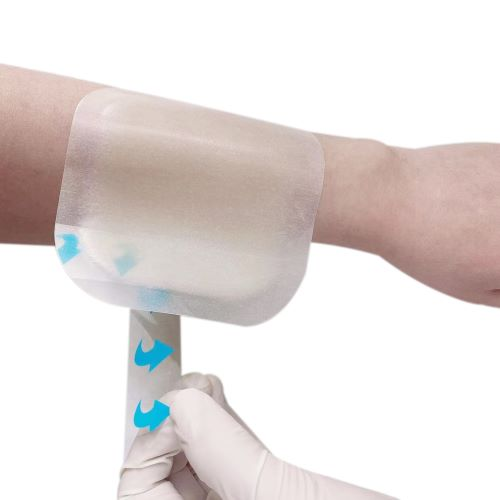
l Can be used to monitor wound progression. Using thinner, more transparent hydrocolloid dressings, the progress of wound healing can be checked without removing the dressings. Monitoring the wound through dressing can reduce the number of dressing changes and avoid interference with the wound, thus promoting the healing process.
l Hydrocolloid dressing protects new skin . Hydrocolloid causes less damage to new tissue than gauze. After removal, the dressing will not adhere to the wound.
l The cost is lower. Hydrocolloid dressings are designed to last for several days. Wear longer, help to save time and money .
l It is flexible. Available in a variety of shapes and sizes. The compliance and flexibility of hydrocolloid dressings support their use on different parts of the body in a variety of situations. In addition, hydrocolloid dressings are water resistant.
How to choose the right hydrocolloid dressing?
l Before choosing a dressing. the patient and the wound should be evaluated as a whole
l Wound exudate level. Hydrocolloid dressings are suitable for low to moderate exudate wounds (depending on the thickness of the dressing).
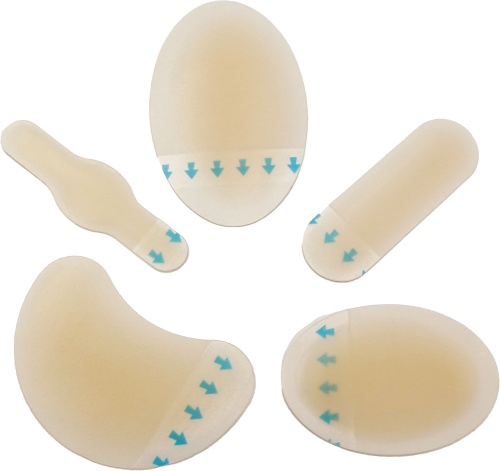
l The location of the wounds on the body. Choosing the shape and size of the dressing to fit the wound is critical. The location of the wound on the body also helps determine if a sticky dressing is needed.
l The wound healing stage. Hydrocolloid dressings are usually used in the later stages of wound healing.
l Wear time. Consider how often dressings are changed and whether they are easy to apply and remove.
l Patient status and preferences. If allergic or adverse reactions occur, please stop using immediately.
Tips for choosing the right hydrocolloid dressing:
l Matches the wound exudate levels.
l Transparent, wounds can be examined without changing or removing dressings.
l Protect delicate wound tissue.
l Size suitable for wound and patient.
l Make the patient feel comfortable.


